When a shipment is urgent, knowing where it is matters almost as much as moving it fast. A delayed update can create the same stress as a delayed truck because operations teams, customer service staff, and receivers are all making decisions based on shipment status. That is why real time expedited freight tracking has become such an essential part of urgent logistics. Businesses no longer want to hear that a shipment is “in transit” without detail. They want clear movement from pickup to delivery, with useful updates they can act on.
Sprinter Emergency Transport Inc. works with businesses that depend on urgent freight every day, and one of the biggest differences between a smooth move and a stressful one is visibility. Real time expedited freight tracking helps teams react faster, communicate better, and protect the outcome of a shipment that cannot afford confusion. This guide explains how real time expedited freight tracking works, what data matters most, and how businesses can use it to make urgent deliveries more controlled and predictable.
Why Real Time Expedited Freight Tracking Matters So Much
Urgent freight creates pressure at every stage of the move. Production teams may be waiting on a part, hospitals may be expecting a device, and customer service teams may be updating a high-value client. In all of those cases, silence creates risk. Real time expedited freight tracking helps reduce that risk because it turns shipment movement into something visible and manageable rather than uncertain and reactive. If a route changes, a weather issue appears, or a consignee needs an updated ETA, the business can respond quickly instead of waiting for a vague status call hours later.
Another reason real time expedited freight tracking matters is that urgent shipments often involve more consequence than routine freight. A standard shipment may tolerate a few hours of uncertainty. A time-critical one often cannot. When every hour matters, businesses need updates that reflect real movement, not old scan events. Real time expedited freight tracking supports better planning for labour, receiving, production, customer communication, and final-mile coordination. In practice, it becomes part of the shipment itself because visibility helps protect the deadline just as much as transport speed does.
Visibility changes decision-making
When teams can see where an urgent shipment is, they can make better decisions while the freight is still moving. Real time expedited freight tracking makes it possible to update customers accurately, prepare receiving teams properly, and take corrective action before a small delay grows into a bigger operational problem.
What Real Time Expedited Freight Tracking Actually Includes
Real time expedited freight tracking is more than a map with a moving dot. In strong urgent logistics, it includes pickup confirmation, departure timing, route progress, milestone updates, estimated arrival times, and communication when something changes. Some systems also include geofencing, exception alerts, and direct coordination between dispatch and the driver. The goal is not simply to show that the shipment exists. The goal is to show useful progress that helps the shipper and receiver understand exactly what is happening.
For urgent moves, real time expedited freight tracking should also include context. A location point is helpful, but it becomes far more valuable when paired with an updated ETA, the reason for any delay, and the next action being taken. This is why the best real time expedited freight tracking is operational, not decorative. It helps businesses act. If weather forces a slower route or if a border wait changes the timing, good tracking makes the new situation understandable instead of confusing.
Tracking should answer practical questions
Good real time expedited freight tracking should help answer simple but important questions. Has the shipment been picked up. Has it left origin. Is it still moving as planned. If it is delayed, why. If the ETA changed, what is the new expected delivery time. These are the answers businesses actually need during an urgent move.
How Tracking Starts at Pickup, Not Mid-Route
The first useful tracking event is not when the shipment is halfway to the destination. It starts the moment the freight is picked up. Pickup confirmation matters because it tells everyone that the urgent plan is now active. At this stage, real time expedited freight tracking should show that the cargo was collected, that the right vehicle is in motion, and that the shipment has entered the live route plan. Without a strong pickup event, the rest of the timeline becomes less trustworthy because the shipment’s actual launch point is unclear.
This early stage is also where many businesses miss opportunities. If pickup is delayed by loading issues, incomplete paperwork, or consignee confusion, that should be visible immediately. Real time expedited freight tracking is most valuable when it reflects the true beginning of the move, not when it starts after the shipment is already on the highway. The earlier the timeline becomes visible, the easier it is to protect the rest of the route.
Pickup visibility sets the tone for the whole shipment
A well-documented pickup creates confidence because it confirms that the shipment is no longer theoretical. Real time expedited freight tracking becomes far more useful when the first milestone is accurate, timely, and connected to the planned delivery window from the very start.
What Happens During Transit and Why Live Updates Matter
Once a shipment is moving, the priority shifts from confirmation to progress management. This is where real time expedited freight tracking becomes most important. During transit, the shipper and receiver need to know whether the route is staying on target, whether weather or traffic is changing the plan, and whether the ETA still supports the delivery commitment. In urgent logistics, hours matter. A route issue discovered early can often be managed. The same issue discovered late may become a missed delivery.
Live updates also matter because urgent shipments are rarely isolated from business decisions. A manufacturing team may be adjusting line timing. A clinic may be preparing space for a delivery. A customer may be waiting on installation. Real time expedited freight tracking gives those teams better information while there is still time to act. This is why strong urgent transport providers treat live tracking as part of the service rather than a separate extra.
ETA quality is just as important as location
Some tracking systems show location but fail to maintain an accurate arrival estimate. That weakens the value of the entire system. Real time expedited freight tracking should always connect route progress to a realistic ETA so the receiver can plan properly and the shipper can communicate with confidence.
Exception alerts are where tracking proves its value
Routine movement is helpful to see, but real time expedited freight tracking becomes essential when the plan changes. If there is traffic, weather, a border delay, or a consignee issue, the system should surface that quickly. The best tracking helps everyone move from surprise to response in the shortest possible time.
Border Crossings, Customs, and Tracking Across Canada and the U.S.
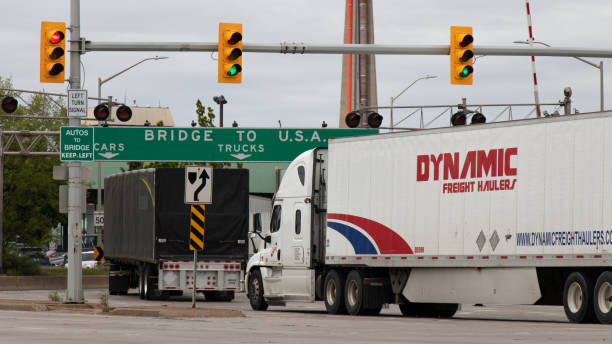
Cross-border urgent freight adds another level of complexity because location alone is not enough. Customs release timing, broker coordination, and border wait conditions all affect the outcome. In these moves, real time expedited freight tracking should not only show route movement. It should also help support timing around the border event itself. If the crossing point changes or the ETA shifts, the customs broker may need that information quickly so the release process stays aligned with the physical shipment.
This is where official resources can also help businesses build stronger planning habits. The Canada Border Services Agency provides guidance on commercial importing and release preparation, while Transport Canada provides transportation guidance relevant to commercial movement. These resources matter because strong customs preparation makes real time expedited freight tracking more useful. When the documentation side is ready, tracking can support the movement. When the documentation side is weak, tracking may simply show a shipment waiting.
Border visibility should support broker communication
In cross-border urgent freight, tracking should help the broker as well as the shipper. Real time expedited freight tracking is strongest when it gives enough notice about route progress, crossing ETA, and any changes that may affect release timing or final delivery planning.
Which Tracking Features Matter Most for Urgent Freight
Not every tracking feature has the same value. For urgent moves, businesses should focus on the features that protect decisions. Pickup confirmation, live route progress, ETA updates, exception alerts, geofenced milestones, and direct communication access are usually more useful than decorative dashboards. Real time expedited freight tracking should help operations, not distract them. The right features are the ones that shorten the time between issue detection and response.
Another important feature is milestone clarity. It should be obvious when the shipment has been picked up, when it leaves origin, when it crosses a border, when it arrives near destination, and when final delivery is completed. Strong real time expedited freight tracking turns these points into dependable signals that the business can use. That is far more valuable than occasional status messages that arrive too late to help anyone.
Focus on operationally useful data
The best real time expedited freight tracking does not overwhelm people with information. It gives them the information that helps them act. For urgent freight, that usually means milestones, ETA, route exceptions, and direct communication support rather than unnecessary detail.
Signs Your Business Needs Better Freight Tracking
- You often call dispatch for updates during urgent shipments
- Customers ask for ETAs that your team cannot confirm confidently
- A shipment can be moving, but nobody knows when it will really arrive
- Delays are discovered too late to recover the delivery window
- Border timing often surprises your operations team
- Your receiving locations are not ready when urgent freight arrives
- You rely on generic “in transit” messages with no real context
- Customer service and operations are not seeing the same shipment status
- Final-mile appointments are missed because timing changed without warning
- You need stronger shipment visibility to protect high-consequence freight
How Businesses Can Improve Real Time Expedited Freight Tracking Internally
Better tracking is not only about the carrier’s technology. It also depends on how the business uses that information. Companies improve real time expedited freight tracking by setting clear expectations at booking, identifying who needs updates internally, deciding which milestones matter most, and making sure shippers, receivers, and customer teams are working from the same information. If one department sees a new ETA and another still uses the old one, the value of tracking drops quickly.
It also helps to define escalation rules in advance. If a delay exceeds a certain threshold, who gets notified first. If the consignee needs a new appointment window, who contacts them. If the border ETA changes, who updates the broker. Real time expedited freight tracking is most valuable when those decision paths already exist. Tracking creates awareness. Process turns that awareness into action.
Tracking works best when teams agree on what matters
A business gets more value from real time expedited freight tracking when internal teams agree on which milestones need to be shared and what should happen if the shipment falls behind. That turns tracking into a control tool rather than just a visibility tool.
Why Choose Sprinter Emergency Transport Inc.
Sprinter Emergency Transport Inc. understands that urgent freight needs more than fast wheels. It needs clear movement, strong communication, and visibility that helps customers make decisions in real time. That is why we treat real time expedited freight tracking as a core part of urgent service, not as a side feature. Our goal is to help businesses see what is happening from pickup to delivery so the shipment feels controlled even when the timeline is tight.
Clients choose Sprinter Emergency Transport Inc. because we focus on practical execution. We know that real time expedited freight tracking is valuable only when it reflects real movement, useful milestones, and clear communication around any change in the route. Whether the shipment is moving across a province or toward a cross-border destination, we work to make the update stream as actionable as the transportation itself. That combination of speed and visibility is what urgent logistics should look like.
Why customers trust our tracking approach
Businesses trust tracking when it helps them solve problems, not when it only confirms that a shipment exists. Our approach to real time expedited freight tracking is built around clear milestones, accurate ETAs, and communication that supports real decisions while the freight is still moving.
Helpful Canadian Government Resources
For businesses moving urgent freight, two useful Canadian government resources are the Canada Border Services Agency and Transport Canada. The Canada Border Services Agency can help businesses understand commercial importing, customs preparation, and border release requirements. Transport Canada provides information related to road transportation and commercial movement that can support better route planning and safer operations.
Using these resources alongside a strong logistics partner can make real time expedited freight tracking even more effective. When border paperwork, safety planning, and transport execution are all aligned, tracking becomes more accurate and far more useful in practical day-to-day operations.
Better Tracking Creates Better Urgent Freight Outcomes
Urgent freight should never feel invisible once it leaves the dock. Businesses need more than movement. They need clarity. Real time expedited freight tracking helps create that clarity by connecting pickup, route progress, ETA, border timing, and delivery into one visible timeline that teams can actually use. In urgent logistics, that visibility often protects the outcome just as much as the truck, plane, or route itself.
Sprinter Emergency Transport Inc. helps businesses use real time expedited freight tracking as part of a stronger urgent shipping strategy. When updates are timely, milestones are clear, and communication is active from pickup to delivery, the shipment becomes easier to manage and far less stressful for everyone involved. That is the real value of tracking done right.
Frequently Asked Questions
- What is real time expedited freight tracking?
Real time expedited freight tracking is the live monitoring of urgent shipments from pickup to delivery using location updates, milestone events, ETA changes, and exception alerts. - Why is real time expedited freight tracking important?
Real time expedited freight tracking is important because it helps businesses manage urgent deliveries, communicate accurately with customers, and respond faster when delays or route changes happen. - When should a business use real time expedited freight tracking?
A business should use real time expedited freight tracking whenever the shipment is time-sensitive, high-consequence, customer-critical, or connected to production, healthcare, or service deadlines. - Does real time expedited freight tracking help with cross-border shipments?
Yes. Real time expedited freight tracking is very useful for cross-border freight because it helps align route progress, crossing ETA, and broker communication so customs timing is easier to manage. - What tracking features matter most for urgent freight?
The most useful features are pickup confirmation, live route visibility, ETA updates, milestone alerts, exception alerts, and clear communication around route or delivery changes. - Can real time expedited freight tracking reduce delays?
It cannot remove every delay, but real time expedited freight tracking can reduce the impact of delays by identifying issues early and giving businesses time to respond while the shipment is still moving. - How does Sprinter Emergency Transport Inc. support real time expedited freight tracking?
Sprinter Emergency Transport Inc. supports real time expedited freight tracking by helping customers monitor urgent shipments from pickup to delivery with stronger visibility, better milestone updates, and practical communication when timing changes.