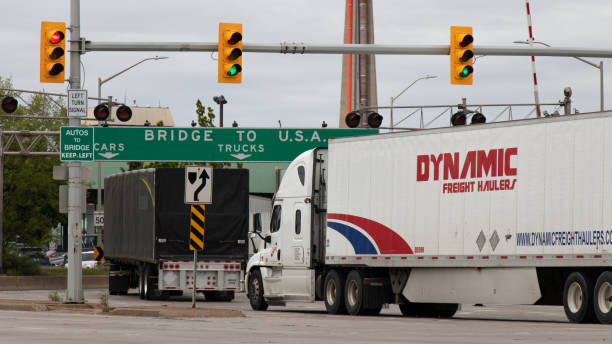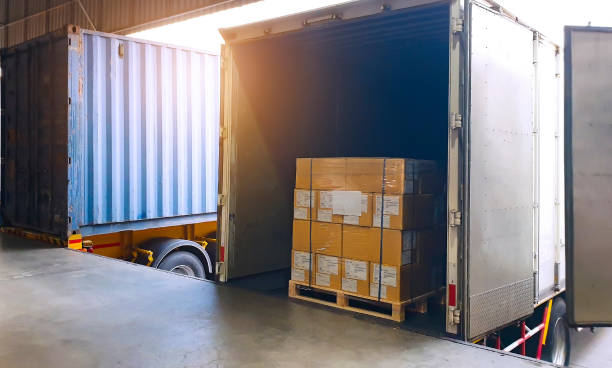
Trade between Canada and the United States supports manufacturers, retailers, automotive suppliers, health care organizations, technology companies, and many other industries. Yet moving commercial goods across the border is not the same as completing a domestic delivery. Canada US cross border freight requires accurate customs data, suitable transportation, coordinated timing, and clear responsibility among the shipper, carrier, customs broker, importer, and consignee.
In 2026, speed alone is not enough. Businesses also need visibility, documentation discipline, contingency planning, and an understanding of how classification, origin, valuation, tariffs, permits, and border reporting affect a shipment. A small error on an invoice or an incomplete origin claim can create a delay that costs more than the transportation itself.
Sprinter Emergency Transport Inc. helps businesses manage urgent and high-priority shipments with practical logistics support from pickup through delivery. This guide explains how Canada US cross border freight works, which documents matter, how to select a service, and what shippers can do to reduce border delays and unexpected expenses.
Understanding Canada US Cross Border Freight in 2026
Canada US cross border freight includes commercial goods transported northbound into Canada or southbound into the United States by road or air. Each direction has its own reporting process, importer obligations, agency requirements, and entry data. The party selling the goods, the party importing them, and the carrier may all hold different responsibilities, so those roles should be confirmed before a vehicle or aircraft is dispatched.
A reliable plan begins with five basic facts: what the goods are, where they were made, what they are worth, who is importing them, and when they must arrive. These details influence the tariff classification, potential duty, admissibility, paperwork, broker instructions, and transport method. Treating Canada US cross border freight as one coordinated process makes it easier to find missing information before it becomes a problem at the port of entry.
Northbound and Southbound Freight Are Not Identical
For a northbound load, the importer must meet Canadian requirements and arrange the appropriate release and accounting process. For a southbound load, the importer must satisfy United States entry requirements while the carrier submits the required advance cargo information. Strong Canada US cross border freight planning recognizes the destination country’s rules while also checking whether the goods require export permits or reporting before they leave their country of departure.
Northbound Shipments Into Canada
Canadian commercial importers generally need an import-export program account and must manage duties and taxes through the CBSA Assessment and Revenue Management system, known as CARM. Importers should confirm their account, financial security arrangements when applicable, and broker delegation before urgent freight begins moving.
Southbound Shipments Into the United States
Shipments entering the United States need consistent invoice, classification, origin, consignee, and importer data. The customs broker and carrier should receive complete information early enough to prepare the entry and advance electronic filing without holding the driver at the border.
Documents Required for Canada US Cross Border Freight
Documentation is one of the most important parts of Canada US cross border freight. A commercial invoice normally describes the buyer and seller, goods, quantities, values, currency, country of origin, and sale terms. The bill of lading supports the transportation record, while a packing list helps customs officials and receiving teams understand how the shipment is physically organized. Regulated goods may require additional permits, licences, certificates, or agency-specific records.
Consistency matters as much as completeness. Product descriptions, quantities, weights, values, and addresses should agree across the invoice, packing list, bill of lading, broker instructions, and electronic cargo filing. Generic descriptions such as “parts,” “samples,” or “equipment” may not give a broker enough information to classify the goods correctly. The CBSA Guide to Importing Commercial Goods Into Canada offers useful official guidance on importer preparation, classification, origin, valuation, release, and record keeping.
A Practical Pre-Shipment Document Checklist
Before releasing Canada US cross border freight, the shipping team should send a complete document package to the carrier and customs broker, then confirm that both parties have reviewed it. The following checklist covers common requirements, but the exact package depends on the goods, value, origin, destination, and government agencies involved:
- Detailed commercial invoice
- Packing list with package count and weight
- Bill of lading or air waybill information
- Harmonized System tariff classification
- Country of origin for each product
- CUSMA certification of origin when claimed
- Import or export permits when required
- Broker, importer, and consignee contact details
Classification, Valuation, and CUSMA Origin
Tariff classification identifies the goods within the customs tariff, while customs value helps determine the duty and tax calculation. Country of origin is a separate question from the country of shipment. For Canada US cross border freight, a product sent from a Canadian warehouse is not automatically Canadian in origin, and a product shipped from the United States is not automatically eligible for preferential treatment. CUSMA may provide preferential tariff treatment when goods satisfy the applicable rules of origin and the required certification information supports the claim, but it does not make every shipment duty-free. Businesses can review the Government of Canada Overview of CUSMA Rules and Certification of Origin and should work with a qualified customs professional when origin is complex. Records supporting the claim should remain accurate, accessible, and consistent with the imported product.
Choosing the Right Canada US Cross Border Freight Service
The best transportation mode depends on the delivery deadline, cargo size, handling needs, lane, border readiness, and cost of failure. Standard transportation may be appropriate for flexible freight, while urgent production material or a critical replacement component may need exclusive capacity. Effective Canada US cross border freight decisions compare the total business risk, not only the quoted transportation price.
Shippers should ask what happens if a connection is missed, a border crossing becomes congested, weather disrupts the route, or paperwork needs correction. A dependable provider should be able to explain the planned route, communication method, shipment milestones, and escalation process. The correct solution protects the delivery window while keeping customs coordination realistic.
Ground Expedite for Direct, Time-Critical Delivery
Ground Expedite is well suited to urgent Canada US cross border freight that can travel efficiently by road. An exclusive vehicle can reduce terminal handling and transfers, provide a direct route, and support closer shipment monitoring. Depending on freight size and lane, the solution may use a cargo van, sprinter van, straight truck, or tractor-trailer. It is especially useful for production parts, industrial equipment, retail replenishment, and other cargo that cannot wait for a routine schedule.
Air Freight, Air Charter, and Hand Carry Options
Air Freight can shorten long-distance transit when the deadline is tighter than a road solution can support. For exceptionally urgent, large, specialized, or route-sensitive cargo, Air Charter may provide dedicated aircraft capacity and a more controlled schedule. Hand Carry can support small, high-value, or mission-critical items that benefit from continuous personal custody. These services strengthen a Canada US cross border freight plan when the cost of delay is greater than the premium for faster transport.
The Canada US Cross Border Freight Process From Pickup to Delivery
A successful shipment starts before pickup. The shipper first confirms product details, packaging, dimensions, weight, declared value, origin, tariff classification, importer information, and broker contact. The carrier then matches the freight to a suitable vehicle or air solution and reviews the timing. The broker should receive the documents early, especially when the goods are regulated, the classification is uncertain, or the shipment is moving outside normal business hours.
After dispatch, the carrier provides the required cargo data and moves toward the planned port of entry or airport. The customs authority and broker manage the applicable release process, but a border release is never guaranteed simply because documents were submitted. Canada US cross border freight may be reviewed, questioned, or inspected. Once released, the carrier completes delivery, obtains proof of delivery, and reports any exception that could affect the consignee or future shipments.
Preparation Before the Driver or Courier Arrives
Packaging should withstand the selected mode and allow safe inspection if customs officers request access. Labels should match the documents, and pallet counts, piece counts, dimensions, and weights should be verified rather than estimated. For urgent Canada US cross border freight, the shipper should identify one person who can answer product questions and approve corrections immediately. Waiting for an unavailable contact can turn a minor documentation issue into a missed delivery window.
Communication at the Border and After Release
The carrier, broker, importer, and shipper should know who communicates each milestone and who handles an exception. Useful updates include pickup confirmation, border arrival, release status, inspection notice, revised arrival time, and final proof of delivery. Good Canada US cross border freight visibility does not prevent every disruption, but it gives decision-makers enough time to inform a plant, customer, technician, or receiving team and activate a backup plan.
Reducing Delays and Costs in Canada US Cross Border Freight
Border delays often begin with preventable data problems rather than transportation failures. Incomplete invoices, inconsistent product descriptions, incorrect importer information, unsupported origin claims, missing permits, and late broker instructions can stop a load even when the vehicle arrives on schedule. A repeatable Canada US cross border freight checklist helps teams review the same critical fields for every shipment and creates a clear record of what was approved.
Cost control also requires a broader view. Freight charges are only one part of the total expense. Businesses may face duties, taxes, brokerage, waiting time, storage, inspection, redelivery, production downtime, lost sales, or service penalties. Spending slightly more on the right capacity, earlier document review, or direct transportation can lower the overall cost when the shipment protects a high-value operation.
Common Mistakes That Businesses Should Avoid
Do not assume a customs broker can repair every issue after the freight reaches the border. Avoid vague invoice descriptions, unverified tariff codes, last-minute importer changes, and CUSMA claims based only on where the seller is located. Canada US cross border freight teams should also avoid selecting a crossing solely because it appears closest on a map. Operating hours, broker coverage, commodity restrictions, congestion, inspection facilities, and the final delivery route can all influence the better choice.
Why Choose Sprinter Emergency Transport Inc.
Sprinter Emergency Transport Inc. understands that urgent freight often protects a production schedule, customer commitment, repair operation, clinical need, or time-sensitive project. The team coordinates Canada US cross border freight with attention to pickup readiness, route planning, shipment visibility, and timely communication. Customers can access Ground Expedite, Air Freight, Air Charter, and Hand Carry solutions according to the cargo, lane, handling requirements, and deadline.
The company’s approach is built around responsive support and practical problem-solving. Rather than treating the border as a small step between pickup and delivery, Sprinter Emergency Transport Inc. considers documentation timing, broker coordination, capacity, contingency options, and final-mile requirements as connected parts of the move. This end-to-end focus helps businesses make faster decisions and maintain control when every hour matters.
Build a More Reliable Cross-Border Shipping Plan
Reliable cross-border shipping comes from preparation, accurate customs information, appropriate capacity, and communication that continues through final delivery. Businesses that define responsibilities early, validate documents, confirm origin and classification, and select transportation according to the real deadline are better positioned to avoid preventable delays. A disciplined Canada US cross border freight process also becomes easier to repeat as shipment volume grows.
When your shipment is urgent, valuable, or operationally critical, contact Sprinter Emergency Transport Inc. to discuss the lane, cargo, customs readiness, and required delivery time. The right plan can combine responsive coordination with Ground Expedite, Air Freight, Air Charter, or Hand Carry service. Start the conversation before pickup so the team has time to identify risks and build the most practical Canada US cross border freight solution.
Frequently Asked Questions
1. What Documents Are Needed for Canada US Cross Border Freight?
Most shipments require a detailed commercial invoice and transportation document, while a packing list is commonly included. Depending on the goods, the package may also require a CUSMA certification, permits, licences, certificates, or agency records. The carrier and customs broker should review the documents before pickup.
2. Is All Canada US Cross Border Freight Duty-Free Under CUSMA?
No. Preferential treatment applies only when goods satisfy the relevant CUSMA origin rule and the claim is supported by valid certification information. Goods may still be subject to taxes, fees, trade remedies, or other charges. Product origin should never be assumed from the shipping location.
3. How Long Does Canada US Cross Border Freight Take?
Transit time depends on the origin, destination, mode, border crossing, weather, traffic, documentation, and inspection status. Ground Expedite can support direct regional or long-distance moves, while air options may suit tighter deadlines. No responsible provider should promise that customs will release every shipment immediately.
4. Who Pays Duties and Taxes on Canada US Cross Border Freight?
The commercial terms and importer arrangement help determine who is financially responsible, but customs authorities collect amounts from the responsible importer or account holder. Buyer and seller should define responsibilities before shipping and ensure the invoice, broker instructions, and contractual terms communicate the same arrangement.
5. Can Urgent Canada US Cross Border Freight Move Overnight?
Yes, many urgent shipments can move overnight using direct ground transportation, Air Freight, Air Charter capacity, or Hand Carry service. Feasibility depends on distance, pickup time, capacity, flight availability, customs preparation, port hours, and consignee readiness. Early booking provides more options and time for document review.
6. What Causes Canada US Cross Border Freight Delays?
Common causes include incomplete invoices, mismatched values or quantities, vague descriptions, incorrect classifications, missing permits, unsupported origin claims, broker communication gaps, congestion, weather, and customs inspections. A pre-shipment review cannot remove every risk, but it can eliminate many preventable errors.
7. How Should I Choose a Canada US Cross Border Freight Provider?
Choose a provider that understands urgent cross-border coordination, offers a service suited to the cargo and deadline, communicates milestones clearly, and can explain contingency options. Ask about tracking, after-hours support, border experience, cargo handling, insurance, and the information required before dispatch.